The Conundrum
After my last post, “10 Things IT Pros Don’t Want You to Know”, I did some soul-searching. I realised I might be leaning on AI too much to solve my problems.
Where would I be if AI suddenly imploded and shat itself?
Is AI making me a better, more constructive team member, or is it slowly turning me into a moron like those in Idiocracy (great movie, by the way)?
So, with that said… what’s the plan moving forward?
A Very Real Problem
I’ve dabbled with AI music—both as a consumer and a creator.
At first, I didn’t even realise I was listening to AI-generated music. Like I always do when I find a song I enjoy, I went looking for more tracks from the same artist. The assumption is simple:
If they’ve got one banger, they must have more.
Well… this artist had banger after banger.
Normally, that’s a good thing—but this time, it became clear that they weren’t a real band.
Not entirely bad, though. I liked the music (if you can call it that), and at the end of the day, it made my commute more enjoyable.
That got me thinking:
“Alright, let’s try this AI music thing.”
Within 15 minutes, with minimal prompting, I was pumping out some surprisingly passable tracks.
So What’s the Issue?
Here’s where things get murky.
Some AI music platforms may have trained their models on real musicians’ work without permission. That puts us in a bit of a quagmire:
- On one hand: AI is an incredible tool for quickly mocking up ideas.
- On the other hand: It’s potentially lifting from real artists without credit, compensation, or acknowledgment.
That’s… not great.
The Aha! Moment
I stumbled across this video:
👉 Poison Your Data. Fight Back Against AI
Which led me to:
👉 The Art of Poison-Pilling Music Files
These two videos genuinely shifted my perspective on AI.
Then came the final piece of the puzzle:
👉 CyberCPU
He talks about stepping back from creating how-to content because AI is scraping and repackaging his work without attribution.
And honestly? That hit home.
What’s the Big Problem?
If AI is pulling its knowledge from everyday creators—musicians, bloggers, YouTubers like CyberCPU—then what happens when those people stop creating?
We end up with a dangerous cycle:
Creators stop → content dries up → AI quality drops → everything gets worse
No fresh ideas.
No new tutorials.
No original music.
Just increasingly mediocre output built on stale data.
In the long run, AI actually depends on humans continuing to create. Without that, the whole system degrades.
The Plan Moving Forward
I’m not ditching AI—but I am changing how I use it.
For example, in Microsoft Copilot, you can define custom instructions:
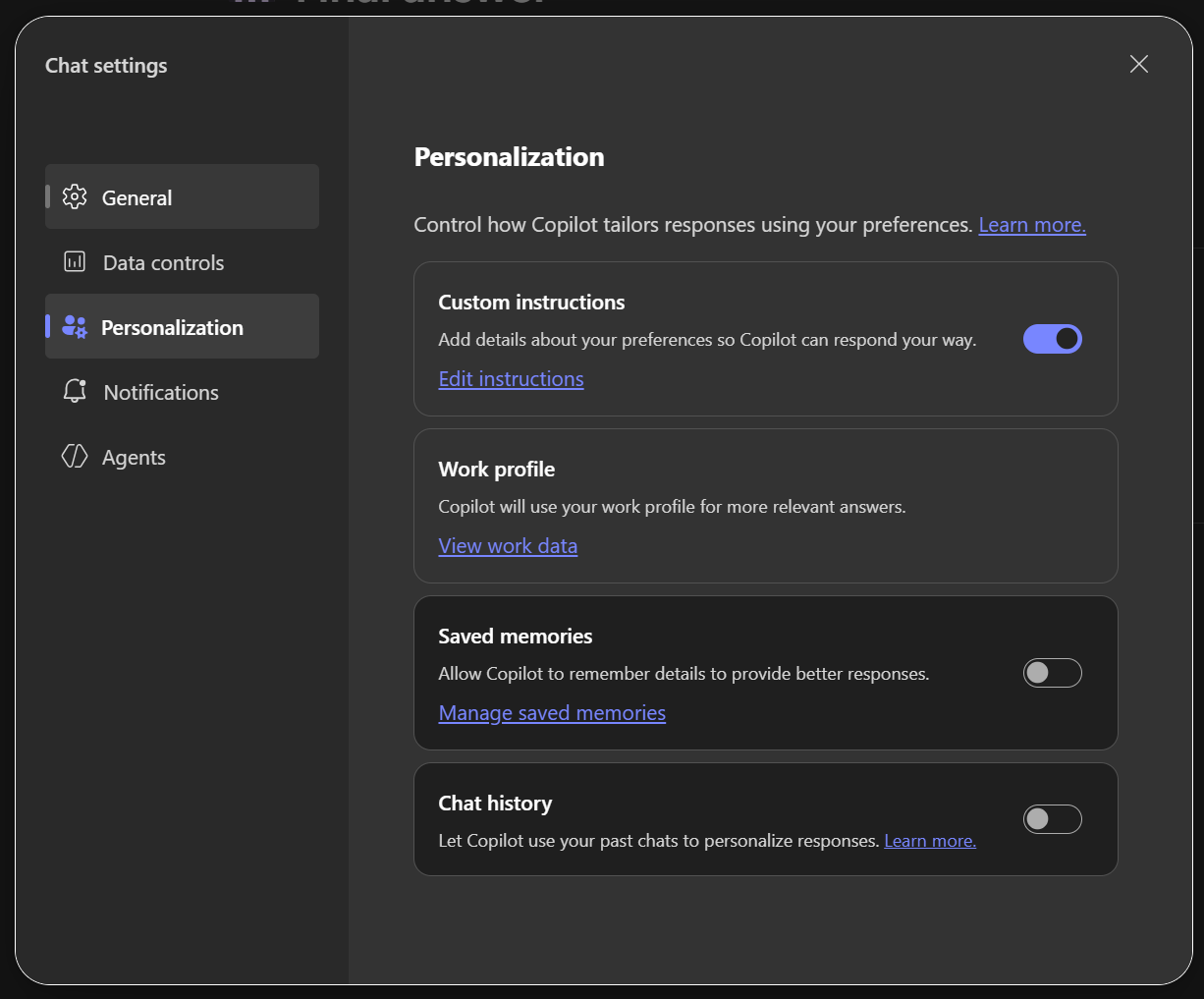
You can tell it how to respond, what tone to use, and even how to behave.
(Not that asking it to speak in a Jamaican accent is particularly useful… but it might be good for a laugh.)
My New Rules:
✅ Always require references for answers
✅ Double-check outputs instead of blindly trusting them
✅ Use AI as a learning tool, not a crutch
At the very least, AI should point me toward real sources and creators worth acknowledging.
Final Thought
Don’t trust. Verify.
If I can use AI to learn better, rather than think less, then maybe there’s a balance to strike after all.